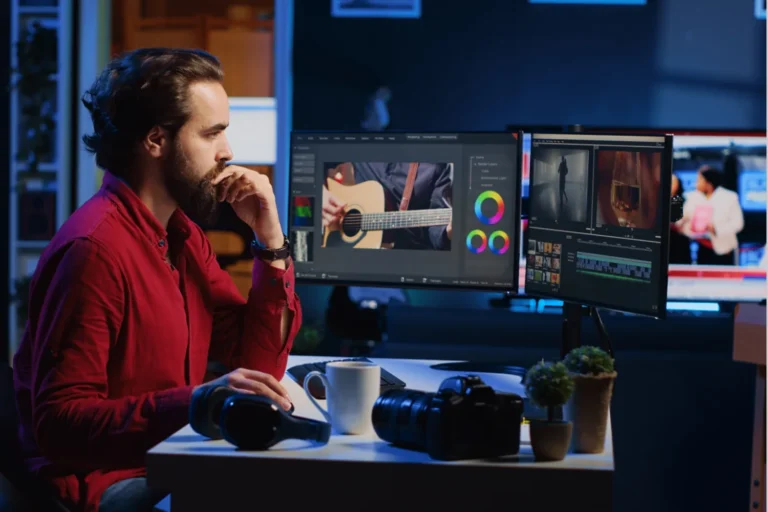
Real Estate Video Editing Cost in 2026: Why a Rush Edit Can Add Up to 50%
2026 real estate video editing rates run about $40 to $150 per listing reel. A 24-hour edit can cost 25% to 50% more if it requires priority handling.

What does real estate video editing include, and what isn't part of it?
Real estate video editing turns footage you already have into post-ready content. The work can include selecting takes, tightening the hook, adding captions, correcting color, cleaning audio, creating a cover frame, and applying brokerage branding. If you would rather hand the footage to a real estate video editor, that page shows samples and prices.
Filming, drone flights, photography, virtual staging, and tools that generate videos from listing photos are separate purchases. Establish that boundary first: an editor prices your deliverables; a videographer also prices the property visit and capture.
Ask whether alternate formats are included. A vertical reel, horizontal listing video, and square feed version may require different framing, text placement, and exports.
What does each of the four jobs agents outsource cost?
Treat these US-dollar ranges as planning estimates, not guaranteed quotes; footage quality, scope, and delivery time change the total.
Talking-head tip: a short clip with captions and a hook
For a straightforward talking-head tip, budget roughly $30 to $100 per video. Very basic cuts can cost less, but check whether accurate captions, audio cleanup, and branding are included.
The extra work often happens before the first caption appears. Your editor identifies the strongest opening, removes repeated explanations, and maintains a consistent caption style across posts.
Phone walkthrough to listing reel
For an edit-only walkthrough reel, a practical starting budget is approximately $40 to $150. The scope typically includes room selection, pacing, property details, music, and brokerage branding.
Compare short-form video editing options using the same footage and requested deliverables. Extra formats, drone footage integration, extensive stabilization, or a separate longer walkthrough can raise the price.
Market update with supporting graphics
A basic talking-head market update may fall around $20 to $80 at the budget end. Treat that as a narrow scope, not a reliable budget for extensive footage review or custom visuals.
Maps, animated charts, and other motion graphics can add roughly $50 to $400. Compare YouTube video editing separately when your update needs longer-form pacing, data checks, supporting footage, and more detailed graphics.
Interview or podcast turned into reels
Interview clips commonly fall around $30 to $150 each. Monthly packages can range from approximately $400 to $2,000 or more, depending on clip count and complexity.
Clarify who selects the moments. Editing timestamps you supply takes less discovery work than reviewing an entire interview, choosing several hooks, and cleaning the full episode.
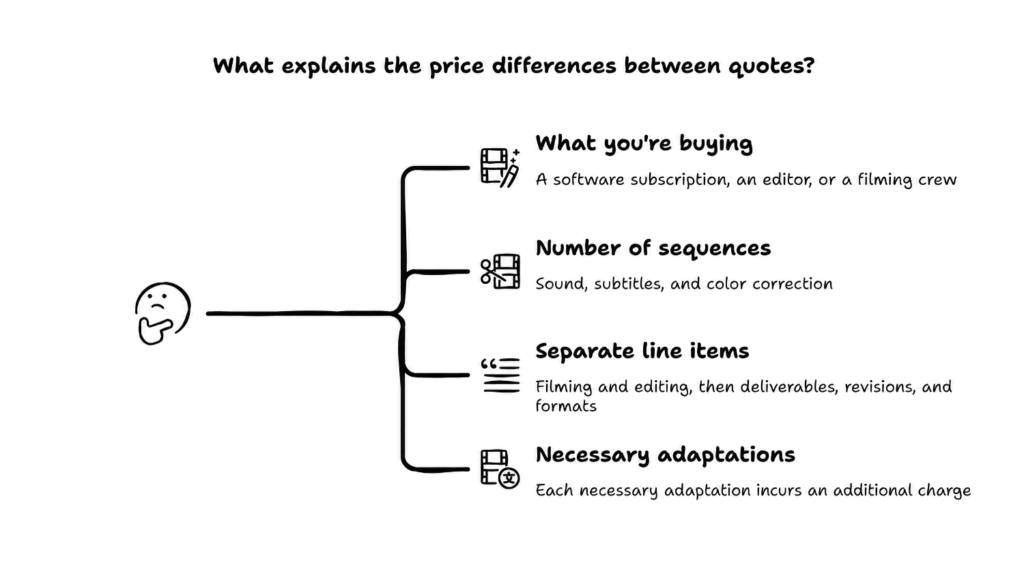
Why do quotes for the same listing video run from about $25 to $500?
The biggest variable is whether filming is included and whose footage the editor uses. Edit-only work can cost a few dozen dollars; a modest filmed-and-edited listing project may run approximately $200 to $600 or more.
Property size, travel, access, equipment, and local labor costs mainly affect production. A large property with twilight exteriors and drone capture requires more coordination than a short interior shoot.
Editing complexity affects both models. Longer footage, animated titles, multiple formats, difficult audio, and accelerated delivery increase the workload. Integrating existing drone footage is an editing task; arranging a drone flight is a production expense.
Apply one test before comparing real estate video editing rates: “Does this include someone coming to the property?”
Why does video keep costing agents more than it should?
When video feels too expensive, posting often slows down. The expense may include both cash payments and evenings spent editing instead of handling clients.
One cause is buying a shoot-and-edit project for every post. Alternatively, you handle everything yourself and absorb the editing time.
That happens when capture and editing stay bundled together. Your phone may already handle the capture needed for tips, neighborhood updates, and simple walkthrough reels.
The repeated bottleneck is post-production: choosing the hook, tightening cuts, correcting captions, placing brokerage information, and exporting versions. Each new clip restarts those tasks.
Build a repeatable editing workflow with fixed formats, reusable branding, a brokerage-approved template, and predictable turnaround. A recurring edit-only service becomes useful when it removes that repeated setup work.
What pushes the final invoice above the listed edit price?
The advertised price may cover only a tightly defined edit. Calculate the all-in cost per posted video before comparing offers.
Common extras include:
- Rush delivery: approximately 25% to 50% above the standard editing fee.
- Additional revision rounds: roughly $50 to $150 each, when billed separately.
- Music licensing: approximately $20 to $200 per track when a separate license is needed.
- Captions or subtitles: roughly $20 to $150 if excluded from the package.
- Motion graphics: approximately $50 to $400 for additional graphic work, depending on complexity.
For an illustrative walkthrough, start with a base edit of $50 to $100. A 40% rush premium adds $20 to $40; one extra revision adds $50 to $150; a separately licensed track adds $20 to $50.
Your hypothetical total becomes $140 to $340. At the upper end, the revision alone costs more than the original edit. These are arithmetic examples, not required charges: many packages include captions, music, and revisions.
Apply the same check to every job. Tips may need caption work, walkthroughs need alternate formats, market updates need graphics, and interviews need source-footage review.
Before paying, ask: “How many revision rounds are included?” Follow with: “Is rush a percentage or a flat fee?” Finally: “Is music licensed for business use?”
Marketplace gig, per-video service or monthly editor: what changes at each price?
A marketplace gig can suit a simple, occasional edit when you provide clear instructions. Check who reviews captions, whether revisions are included, and whether your brand settings carry into future orders.
A structured per-video service offers limited commitment and a defined deliverable. It suits occasional listing reels, although priority delivery and additional versions may cost extra.
A monthly pack reserves recurring output and may lower the effective cost per video as usage grows. Confirm whether the same editor or team handles your work, how many edits can run simultaneously, and whether priority capacity is included.
For brokerage marketers, continuity matters: shared branding, consistent review steps, and clear approvals across agents. Agencies reselling the work should also confirm white-label delivery and resale rights.
Compare packages using videos you will actually approve and publish. Unused monthly capacity can erase an attractive per-video discount.
How fast should a listing reel come back, and what does speed cost?
Plan around roughly 48 to 72 hours for standard edit-only work and approximately three to seven business days for full production. Actual timing depends on scope, capacity, and when the editor receives a complete brief.
A 24-hour real estate video editing service may charge approximately 25% to 50% extra when that deadline requires priority handling. Same-day work can depend on even tighter acceptance windows and staffing.
The premium pays for queue changes, after-hours work, or additional capacity. However, a fast deadline already included in the standard package should not automatically create a rush charge.
Before an open house, confirm the exact delivery time and time zone. Ask whether the deadline covers a first draft or an approved export, and allow time for revisions.
Get the priority fee and late-delivery remedy in writing. A future-order credit may help your next listing, but it cannot recover a missed publishing window.
Who checks the brokerage name before the video goes live?
Give your editor the correct brokerage name and an approved placement template before work begins. Building required information into the video can reduce reliance on captions or profiles that may change when content is shared.
Your brokerage should approve the template and final advertising claims. An editor can implement instructions consistently, but legal review remains a separate responsibility.
Texas
Texas advertising rules generally require the broker’s name to be at least half the size of the largest contact information. Social media placement can involve a directly linked profile, subject to the applicable conditions.
Business profiles may also need Information About Brokerage Services and Consumer Protection Notice links. Have your broker check current state real estate advertising requirements rather than assuming a logo alone satisfies them.
Nebraska
Nebraska requires the broker’s business name to be prominently displayed and easily identifiable. Team branding should not obscure the brokerage’s identity.
Use a clearly readable opening frame as your production standard, then obtain brokerage approval for placement and prominence. Review state real estate advertising requirements before reusing the template across campaigns.
Other states
Rules differ by jurisdiction and advertising format. Confirm the requirements where you operate before adopting a template built for another state.
Avoid unsupported promises about appreciation, investment returns, or mortgage rates. Route financing claims through the appropriate compliance reviewer before export. This section provides workflow guidance, not legal advice.
How many videos a week can an agent sustain, and which pricing model fits that volume?
One batch-filming morning can capture several tips and a walkthrough, supporting two or three posts that week. Record short, distinct takes and send property facts alongside the original files.
Below roughly one video per week, per-video pricing is often simpler. At two or three weekly posts, compare a monthly real estate video editing package against your actual one-off spending.
Calculate effective cost by dividing the monthly payment by the number of usable videos you publish. Check rollover rules, source-footage limits, and whether longer videos consume more package capacity.
Teams can share a brand template while maintaining separate agent details and approval routes. Assign one coordinator to consolidate feedback and prevent conflicting revisions.
Choose the volume you can film, review, and publish consistently. A smaller package used fully can offer better value than an ambitious plan that leaves edits unfinished.
How can you check an editor's quality before committing?
Start with one paid edit using your own ordinary footage. A phone walkthrough with uneven lighting and background noise reveals more about the working relationship than a polished highlight reel.
Check the deliverable against practical criteria:
- Verify captions, street names, prices, and property features.
- Check brokerage identification against your approved template, including the opening frame.
- Listen for clear speech without overpowering music.
- Review framing, text readability, and the requested aspect ratios.
- Confirm revision timing, final-file delivery, and permitted usage.
Send one consolidated revision request and assess how accurately the editor implements it. Clear feedback also helps distinguish editing problems from an incomplete brief.
Phone footage works best when you clean the lens, move slowly, and send original files. Editing can improve exposure and pacing, but severely blurred footage or distorted audio may require reshooting.
Conclusion
Comparing equivalent edit-only work gives you a clearer budget for real estate video editing, especially when a 24-hour deadline can add up to 50% for priority handling. Try one paid listing reel from IntentClose before committing to a monthly package based on the videos you can consistently publish.
Key takeaways
- Budget roughly $40 to $150 USD for a straightforward listing reel using existing footage; filming costs extra.
- Standard editing typically takes 48 to 72 hours; 24-hour rush delivery may add 25% to 50%.
- Revisions, music licensing, captions, graphics, and extra formats can increase the final bill.
- Confirm whether your deadline covers a first draft or an approved final export.
- Monthly packages offer better value only when you consistently use the included capacity.
- Brokerage-approved templates and one paid test edit help reduce errors before scaling up.
FAQ
Which price range should you budget for a standard listing video edit in 2026?
Budget roughly $40 to $150 for a straightforward listing reel when you already have the footage. Longer walkthroughs, custom graphics, extra formats, and extensive footage review can push the real estate video editing cost higher.
Before you order, compare quotes on the same footage and confirm four things: the finished length, how many revisions are included, whether music rights are covered, and the delivery deadline.
Is a rush edit worth paying 25% to 50% more, or should you stick with standard delivery?
Pay the rush premium only when a fixed date, like an open house, falls inside the standard turnaround. Otherwise, standard delivery keeps your cost down. The extra 25% to 50% covers your editor rearranging scheduled projects, working outside normal hours, or adding capacity, so the exact premium depends on your deadline and their workload.
Before you commit, ask whether priority delivery is a percentage or a flat fee, and whether it includes revisions before your publishing deadline.
Should you choose a monthly editing package or pay per video?
Go with a monthly package when you publish consistently and will use the full included capacity. Pay per video when your footage arrives irregularly or unused credits expire. A monthly package can lower your cost per video, but only for edits you actually approve and publish.
To decide, compare the monthly total with what equivalent individual edits would cost you, including revisions and extra formats.
Sources & references
- Commission Statutes, Rules and Regulations, and Other References (nrec.nebraska.gov)
Post-ready shorts in 72 hours, checked by a human.
Get your shorts edited
Written by
Tanguy Hubner · Founder, IntentClose
I cut shorts every week for creators, real estate teams and agencies, in After Effects with my own automation on top. 163 reviews, 1,000+ deliveries, 11 years in the trade.
This article came out of the same pipeline I run for clients. Let me write yours →